
Table of Contents
If you drive an F150 and want a richer cabin without replacing the factory upholstery, luxury car seat covers are the upgrade you are shopping for.
The right set protects the seats you already own, matches your personal style, and goes on in a single afternoon.
Types Of Luxury Seat Covers
Premium options break down into three practical groups: custom-fit leather, heavy-duty waterproof material, and slim factory-look covers.
Each group solves a different problem, so the best pick depends on how the F150 actually gets used, not on which set carries the highest price.
Most shoppers start by browsing luxury car seat covers by make and model, then narrow by material once they know what the cabin needs.
Custom-Fit Leather Seats
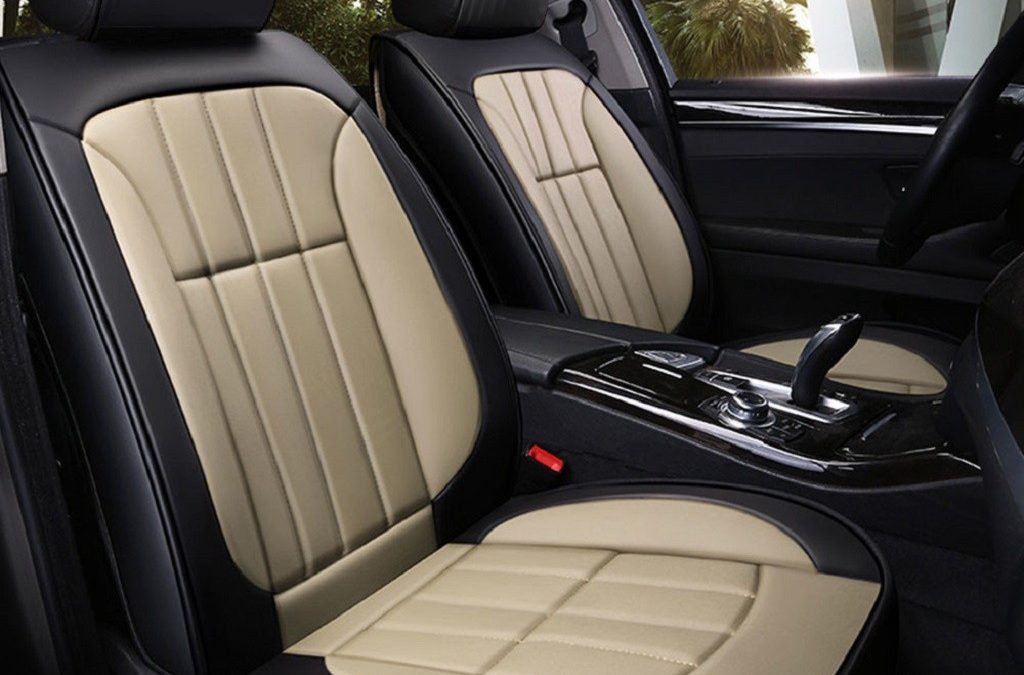
A custom-fit leather set is cut from a digital pattern of one exact seat, so the panels wrap the bolsters, base, and headrests with no loose fabric.
Many kits use perforated leather across the seating surfaces and a matching synthetic on the sides and back, with a half-inch of foam underneath.
The result is a perfect fusion of showroom looks and everyday protection.
This option suits owners who keep a truck for years, and anyone who bought a cloth-trim F150 and wanted the leather package the dealer did not have in stock.
Custom leather is the wrong call for a truck that hauls mud and wet gear five days a week.
Modern F150 front seats house a seat-mounted side airbag in the outboard bolster, so any cover that wraps that bolster has to be sewn with a breakaway seam that tears open on command.
Buy only kits that state they are fully airbag compatible for your seat type.
Heavy-Duty Waterproof Seat Covers
Heavy-duty waterproof covers trade softness for survival, using canvas, ballistic nylon, or a coated H2O fabric that sheds liquid instead of absorbing it.
Canvas resists wear and tear from tool belts, buckles, and daily sliding in and out of the cab, while coated fabrics stop spilled coffee, rain, snow, and dog hair from ever reaching the foam.
These are the right choice for work trucks, farms, hunting rigs, and any F150 that carries kids or pets.
They are also the sensible pick for a leased truck, where a single stain at turn-in costs more than the covers did.
Expect a two- to three-year warranty on a quality heavy-duty set, and expect the covers to last longer than that with normal cleaning.
Truck owners weighing this against leather can compare the tradeoffs for pickup interiors first.
Slim Factory-Look Luxury Car Seat Covers
Slim covers use thin, high-grade leatherette with minimal padding so the seat keeps its original shape and profile.
The goal is a true OEM appearance, where a passenger sits down and assumes the truck left the factory that way.
Stitching lines, perforation patterns, and grain match the F150 seat design instead of hiding under bulk.
Choose slim over heavy duty when the truck is mostly a commuter, a family hauler, or a weekend vehicle, and when you care about how the seat looks and feels.
Go heavy duty instead the moment work gear, wet boots, or job site dust enter the picture.
Universal Versus Custom Fit Seat Covers
The key difference is simple: universal covers are sized to a general seat shape, while custom fit covers are patterned for one year, make, model, and trim.
Universal sets cost less and install faster, usually in under an hour, while custom sets cost more, take two to three hours, and look like upholstery when finished.
The trade-offs worth knowing before you buy:
- Universal covers bunch at the bolsters and gap around the seat base, and that slack shifts every time you get in.
- Universal covers often skip cutouts for lumbar dials, heated seat vents, and power controls.
- Universal covers rarely align with a seat-mounted airbag seam, which is a safety problem in an F150.
- Universal covers may not fit the 40/20/40 front bench or the fold-flat rear seat in SuperCrew and SuperCab trucks.
- Custom covers use silicone or rubberized backing and anchor straps so the panels never creep out of place.
What To Look For In Car Seat Covers
Four features separate a set you forget about from a set you fight with every week: material, fit, safety, and durability.
Each one changes how the covers feel on day one and how they look after two winters.
Material And Finish
Genuine leather gives a soft hand feel and a deep grain that ages well, and it needs conditioning a few times a year to stay that way.
High-grade synthetics such as premium leatherette copy the look and feel of leather, cost less, and wipe clean with a damp cloth.
Nappa leather sits at the top of the range for softness, while canvas and coated fabrics sit at the top for toughness.
Temperature matters more in a truck than in a sedan, because the cab is tall, glassy, and often parked in full sun.
Perforated panels add natural breathability that pulls heat away from your back on long drives, and multi-layer foam helps regulate temperature in both directions.
Fit And Installation
A true custom fit shows itself in details you can check with your eyes and hands.
Seams should follow the factory stitch lines, not cross them.
Cutouts should line up exactly with seat belt anchors, headrest posts, latch points, armrest hinges, and every dial or switch on the side of the seat.
There should be no loose fabric at the bolsters after the straps are pulled tight.
Plan on two to three hours for a full front and rear kit on an F150, working slowly and following the manual.
No seat removal is required, since quality covers slip over the existing seats.
Professional installation through an authorized shop typically runs $100 to $500 depending on the vehicle.
Shoppers unsure about sizing can read this guide to getting the fit right.
Safety And Functionality
Confirm two things before anything else: the covers are fully airbag compatible, and every seat control still works after installation.
Seat-mounted torso airbags deploy from the seat itself, typically within 10 to 20 milliseconds of a side crash, according to the Insurance Institute for Highway Safety.
IIHS data also shows side airbags with head protection reduce a car driver’s risk of death in a driver-side crash by 37%, and an SUV driver’s risk by 52%.
A cover that blocks the airbag seam is not a cosmetic mistake; it is a safety failure.
Check that heated and ventilated seat functions still pass air and warmth through the material, and that power switches, lumbar dials, and memory buttons stay reachable.
Headrests should still raise, lower, and remove without unthreading the whole cover.
Armrests should fold freely, and the center console lid on a 40/20/40 bench should open all the way.
Durability And Warranty
Judge heavy duty construction by the stitch, not the sales copy.
Double-stitched seams, bonded thread, and reinforced stress points at the bolsters tell you the set was built to be sat on ten thousand times.
Silicone or rubberized backing keeps the panels from sliding, which is what causes premature wear in cheap covers.
Read the warranty terms in plain language before you buy.
Quality leather kits commonly carry a three-year warranty, and the useful question is what that warranty actually covers.
Ask whether it applies to seam failure, color transfer, and cracking, or only to manufacturing defects found on arrival, and ask who pays return shipping.
How To Choose The Right Luxury Car Seat Cover
Turn those four features into a short decision path.
Step one: confirm your exact year, cab style, and seat configuration, because a SuperCrew with bucket seats and a SuperCab with a 40/20/40 bench take different kits.
Step two: pick the material based on what lands on the seat most often, not on what looks best in the product photo.
Step three: verify airbag compatibility and control cutouts for that specific seat, then compare warranty length and what it covers.
For daily drivers, prioritize fit above everything else.
A snug custom set stays quiet, stays put, and keeps the vehicle’s interior looking factory fresh for years.
For work trucks, prioritize heavy-duty material and waterproofing over softness.
A canvas or coated set that survives a decade of tools and weather is worth more than a finish that stains in month two.
Budget tiers generally follow material and fit, and prices vary based on seat count and cab style:
- Entry tier: universal or semi-custom synthetic covers, lowest cost, quickest install, loosest fit.
- Middle tier: custom fit premium leatherette or canvas, strong protection, close factory appearance, best value for most F150 owners.
- Top tier: custom fit genuine or Nappa leather with perforated panels and multi-layer foam, softest feel, highest style, most maintenance.
Frequently Asked Questions
Four questions come up more than any others from F150 owners.
Will Seat Covers Protect Leather Seats?
Seat covers protect leather seats from the three things that ruin them: UV exposure, abrasion, and spills.
A covered seat does not fade, crack, or wear shiny at the bolster where you slide in and out.
The protection only works if the seat underneath is clean and dry at installation.
Moisture and trapped debris are the real risk, because grit sits between two surfaces and sands the original leather with every mile.
Wipe the seat down, let it dry fully, and vacuum the crevices before the covers go on.
Pull the covers once a year to check underneath.
Are Custom-Fit Covers Airbag Compatible?
Custom-fit covers are airbag compatible when they are built with a breakaway seam over the seat-mounted side airbag module.
That seam uses a specific thread that splits under deployment pressure so the airbag exits the seat on schedule.
Many custom kits are engineered this way and state it in the product details.
Look for a clear compatibility statement, and ask the seller for certification or crash testing documentation when it is available.
Never buy a cover that wraps an airbag bolster without saying anything about the airbag.
Universal covers are the most common offenders here.
How Do I Clean Leather Seat Covers?
Clean leather seat covers with a soft microfiber cloth, warm water, and a small amount of pH-neutral leather cleaner.
Wipe in the direction of the grain, work one panel at a time, and dry immediately so water never sits in the perforations.
Apply a leather conditioner afterward to keep the surface soft and prevent cracking.
Skip household cleaners, alcohol wipes, and stiff brushes, because they strip the finish.
Clean every four to six weeks for normal use, and every two weeks for a work truck or a vehicle carrying pets.
There is a fuller walkthrough on cleaning leather covers safely.
Do Heavy-Duty Covers Fit My Vehicle?
Heavy-duty covers fit your vehicle only when they are matched to the exact year, make, model, and seat configuration.
Two trucks from the same model year can take different kits if one has bucket seats and the other has a split bench.
Use a vehicle selector that asks for make, model, and year, then confirm the cab style and whether the truck has an integrated console or a center jump seat.
If a product page does not offer that level of filtering, measure the seat back height, base width, and headrest type before ordering.
Browse And Next Steps For Car Seat Covers
Start by filtering the catalog by make, model, and year, then narrow by material once the compatible kits are on screen.
Sort the shortlist by what the truck endures each week, and read the warranty length on the finalists.
Bestsellers are a useful shortcut, since the sets that move fastest for a truck are usually the ones that fit best.
Before ordering, watch an installation walkthrough so the two- to three-hour job holds no surprises.
The step-by-step installation guide covers the sequence, the strap routing, and the mistakes that cost an extra hour.
